


After a successful Kickstarter campaign launched in early 2021, The Way of Wrath seems to have gone quite a long way since, especially since the Animmal team partnered with the famous publisher Hooded Horse to help them. Despite still not having an exact release date, the game is set to come out in 2025, and we have had the chance of discussing with Sandro and Dato, the two main developers on The Way of Wrath, who accepted to answer our questions.
RPG Jeuxvideo: Greetings, and thank you for granting us this interview! Could you introduce yourselves?
Dato & Sandro: We are Dato Kiknavelidze and Sandro Gakhokidze, two game development veterans from Tbilisi, Georgia. We got tired of whining about the kinds of experiences we wanted to see and decided to actually make them.
RPGJV: How did you get the idea for the The Way of Wrath?
D&S: I (Sandro) went to get water on a hike at night. I got lost and wandered around until I found an old ruined tower. I lit a fire and waited there until dawn.
There was something magical and time-warping about sitting next to a ruined medieval tower in the middle of nowhere, where the only reminder that I was in modern times was the clothes on my back.
I contemplated how different the world might have felt to some distant traveller who had stumbled upon the same tower in the night. In my mind, they had no notion of their place on a world map, no clear idea of what kind of culture they would encounter past the next horizon. Their world was magical, full of unknowns and wonders, while mine, even when lost and alone, was certain and predictable.
And I thought about how, even in magical fantasy worlds, we bring this encyclopaedic certainty through our desire to craft meticulous worlds. You rarely feel like a stranger or lost when exploring new worlds. You have your precise GPS location, detailed lore to orient yourself, and everywhere you go feels safe and pre-explored.
With The Way of Wrath, we wanted to bring the feeling of the unknown—an ancient and unexplored world, filled with uncertainty and true exploration. A world where the lines between myth and reality are blurred.
RPGJV: What were your influences during the development of the game?
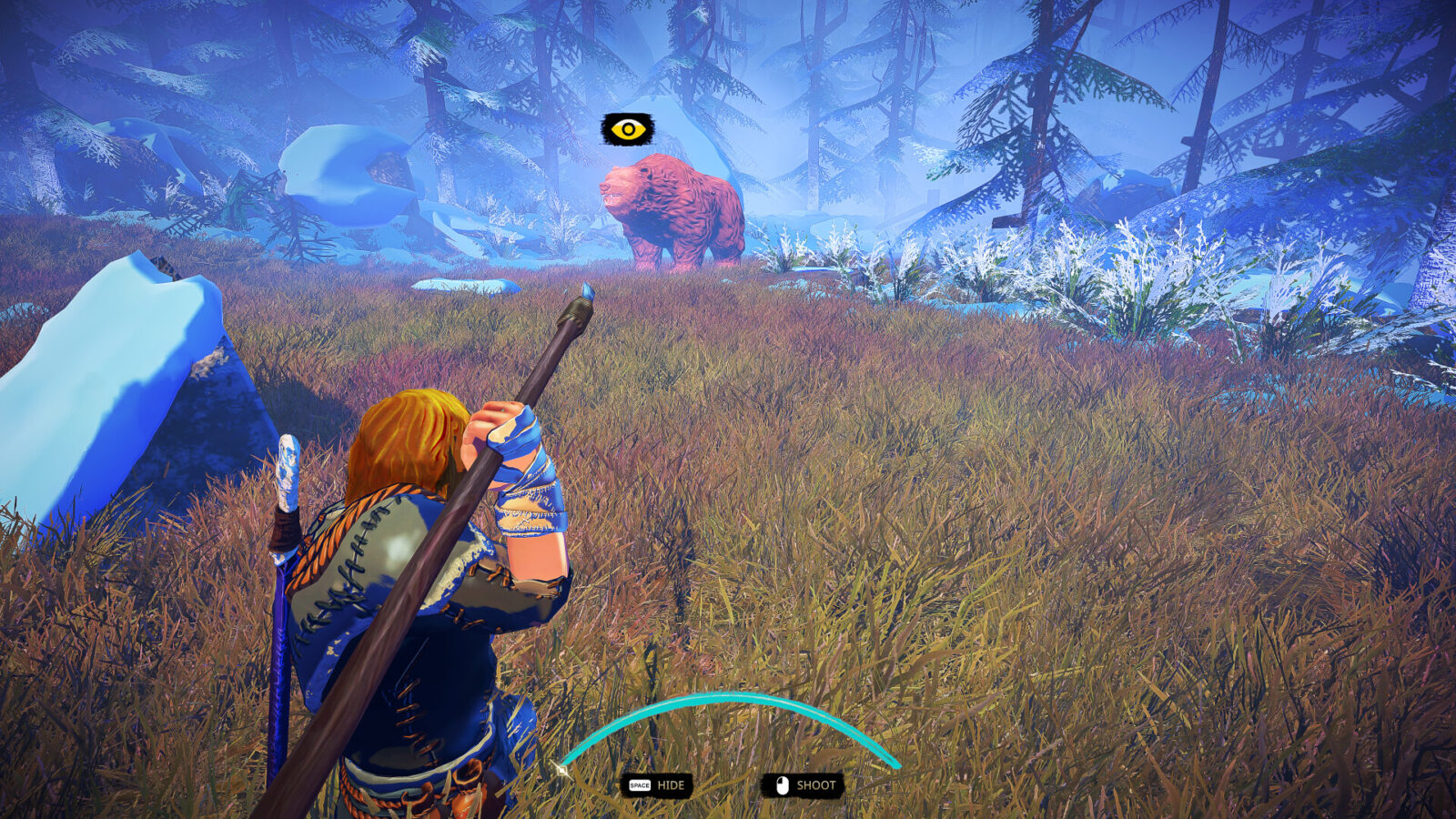
D&S: A lot of things! At its heart, we wanted to create an exciting, small, handcrafted open world that felt believable and immersive, like Gothic 1 & 2, but with the rich mechanics and choice-driven storytelling of classic CRPGs like Baldur’s Gate 2 or Planescape: Torment, with a lot of thematic, immersive-sim elements as the cherry on top.
We wanted to craft a world and a story that you could truly interact with, play in, and make your own. So, we took inspiration from many wonderful interactive games like Ultima, Zelda, Elder Scrolls, Divinity: Original Sin, and many more.
For the story, we took deep inspiration from real human history, various tribal societies, and ancient civilizations.
RPGJV: How much time did the development take and how did it go?
D&S: AAAAAAAAAAA!
5+ years and still going 😀
RPGJV: How many people worked on the game? What tools did you use?
D&S: The core team consists of just the two of us. Dato handles all the art direction, as well as art and animation production. Sandro does coding, game design, and story. We both work on level design and game content.
Post-Red Interactive, a Georgian sound and music production company, worked on part of the audio and music.
Our publisher, Hooded Horse, does a wonderful job managing marketing, events, PR, advertising, localization, and many other publishing-related tasks.
RPGJV: What are the features and specificities of The Way of Wrath? Its length? Its replay value? How would you describe the game?
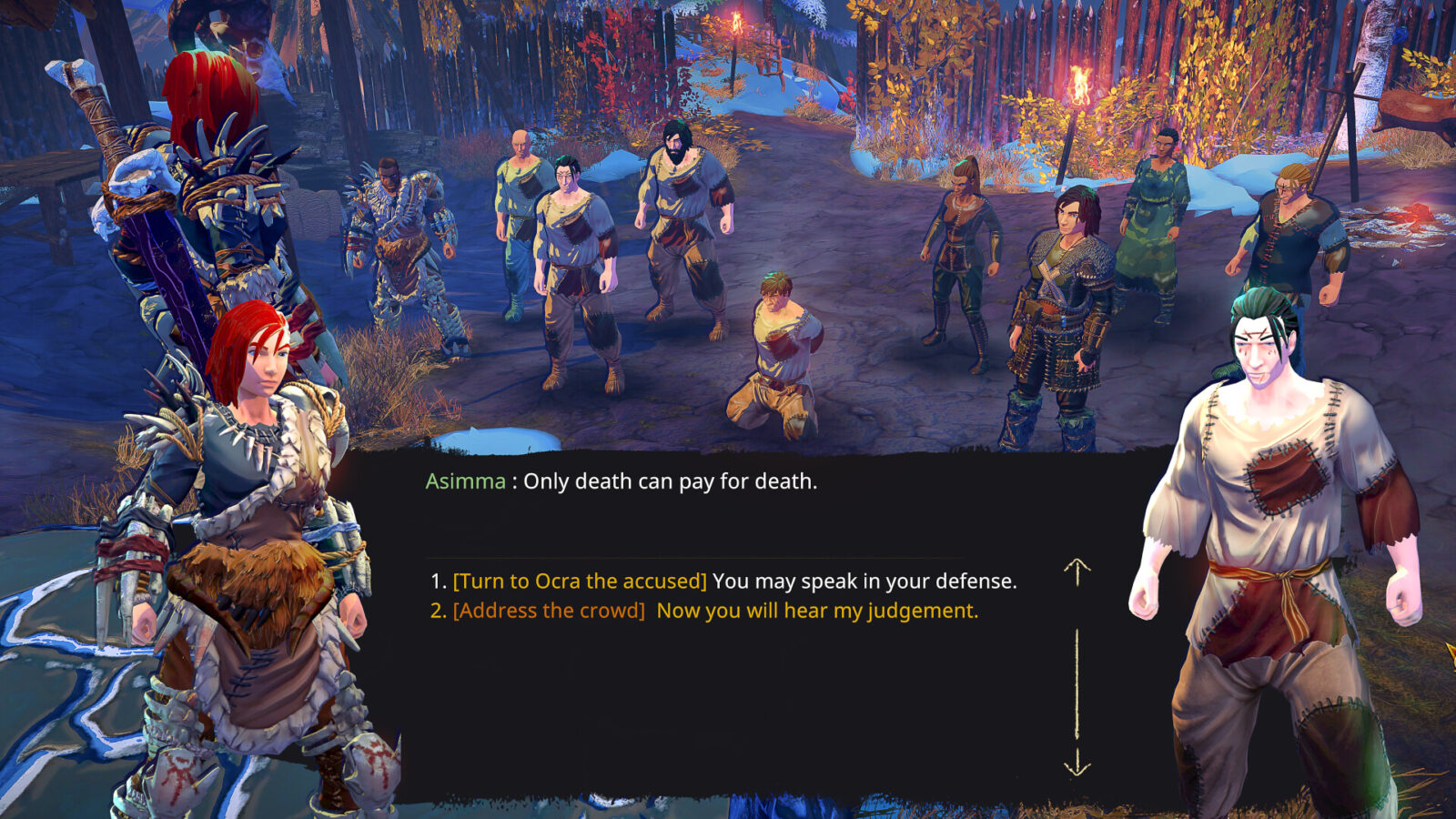
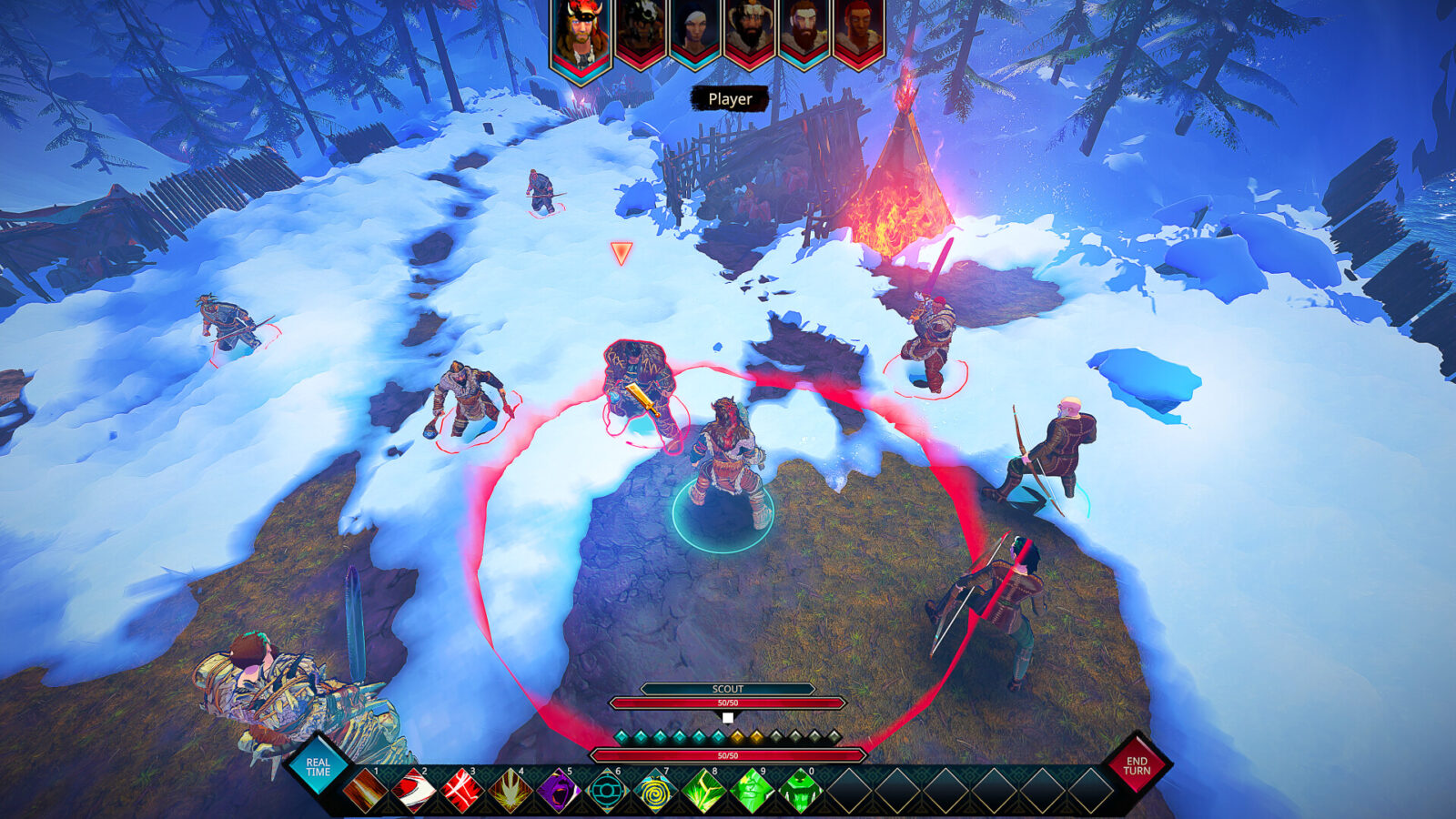
D&S: The Way of Wrath is a story-driven, open-world, tactical RPG. The core concept revolves around a severely outnumbered group of war survivors entrenching themselves in an old ruined fortress and doing everything in their power to survive a massive siege.
The game features 10 dynamic story chapters, each represented as a day. Every morning, you wake up in your fortress, take care of your allies, launch fort projects, manage disagreements, and set down laws. Then, you venture out to explore a handcrafted open world—gathering resources, finding allies, setting up outposts, and fighting against a powerful enemy to turn the odds in your favor.
The choices you make each day shape the events of the next, as the handcrafted story dynamically updates to reflect the consequences of your actions.
Players will find all the juicy features they might expect from a fully-fledged RPG, including a choice-driven story, companions, allies, romance, tactical combat, character creation, deep exploration, inventory and equipment management, crafting, and many more unique elements inspired by the game’s prehistoric setting. These include intricate hunting mechanics, ice fishing, an exploration mastery skill tree, pets, survival elements, and fort management.
The game also has high replayability, as each faction has its own branching storyline, creating many possible combinations for players to explore.
RPGJV: What is the story of the game? How did you develop its lore?
D&S: The Way of Wrath aims to tell the history of human civilization through the eyes of a single tribe. To achieve this goal, we delved deep into ancient human history to craft a believable world. As a result, our universe is dynamic and ever-changing. As time passes, the world evolves.
Civilizations rise and fall, tribes and nations transform—either joining into larger entities through conquest or splintering into new factions when empires collapse. Natural cataclysms and even new viruses irreversibly shape The Way of Wrath’s universe.
The easiest way to describe how we craft the story and lore is: through time and space.
This is reflected both in the branching storylines that players will encounter for each faction and character in The Way of Wrath and in the living lore that their actions will shape, carrying over as they import saves into future games. Every game we create in The Way of Wrath universe will allow players to both experience and shape human history through the eyes of a single tribe.
RPGJV: Do you have a favourite character in the game?
D&S: Sandro: Guurka. A huge warrior who travelled thousands of miles to The Way of Wrath’s lands with one goal—to hunt a giant snake upon whose back he believes the whole world rests, and to cook and eat it.
Dato: Nuria. Nuria is a young shaman girl with a deceptive innocence. When the player first encounters her, she appears fragile and terrified—a lost child who lost her brother, desperately seeking shelter. But beneath this facade lies a far more formidable truth.
Raised by the fierce and powerful Anagali, leader of the Eshma’s shaman caste, Nuria is anything but helpless. She is one of the most intriguing characters in the game—a master of deception and an unwavering force of herbs and poisons in her arsenal. With her nearly white hair and piercing light blue eyes, she looks ethereal and harmless. Yet, behind that delicate appearance is a ruthless and powerful shaman who wouldn’t hesitate to slit a throat if necessary.

RPGJV: Do you have a specific moment in the game you prefer above all others?
D&S: Sandro: The final siege. It’s the culmination of all the effort you’ve put into the game, where all your choices and actions shape the ending.
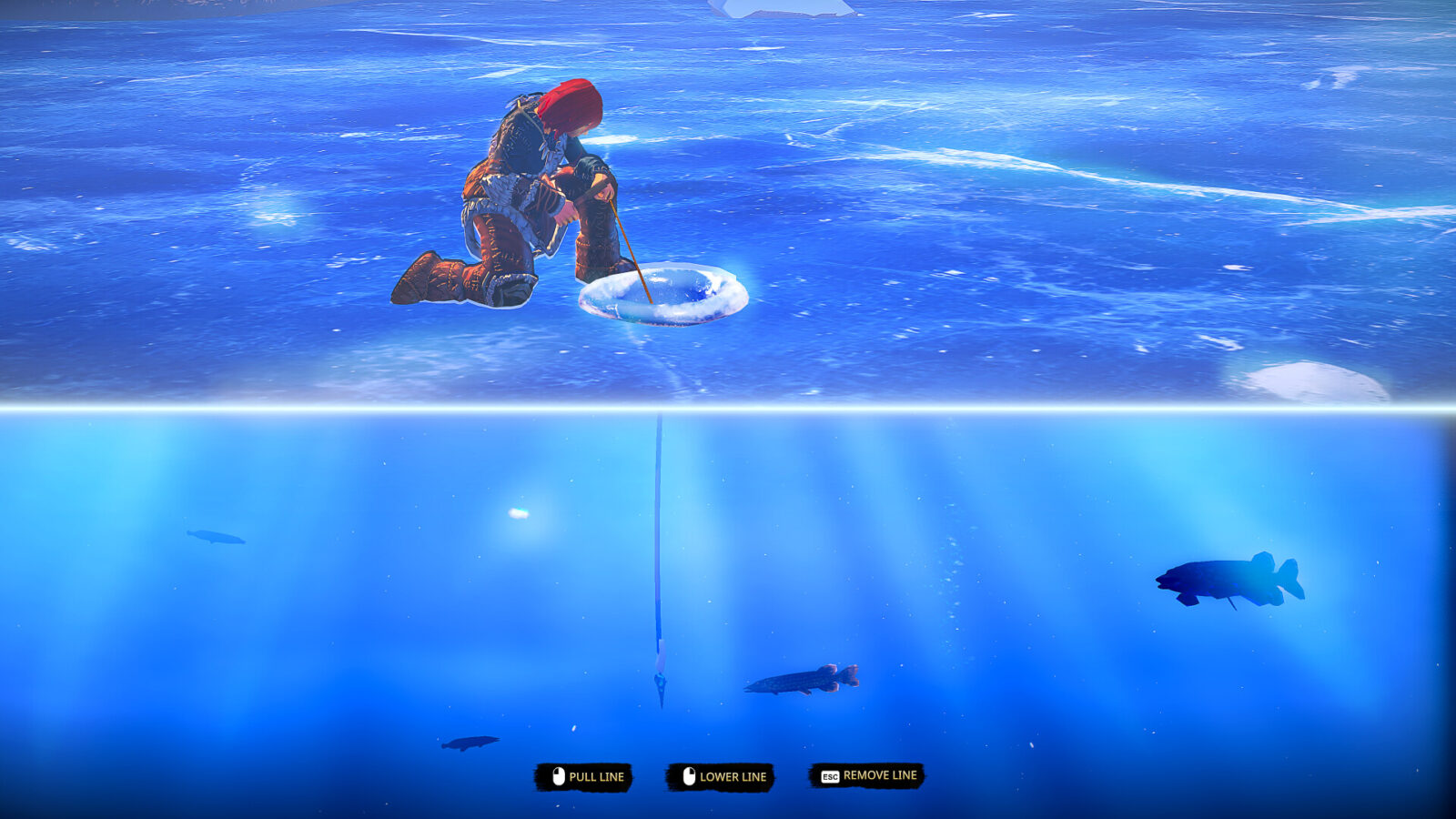
Dato: I would tell more about my favorite feature of the game. Its Ice Fishing—a unique and dynamic mechanic of The Way of Wrath. Unlike traditional fishing systems, our game lets you break the ice anywhere on frozen lakes and start fishing right on the spot.
Once you’ve carved out your fishing hole, you’ll get a real-time view of the underwater world, where you can spot fish swimming beneath the surface. But catching them isn’t as easy as it looks! You’ll need to carefully choose the right bait, and even then, patience and skill are key. If the tension on your fishing line gets too high, it can snap, costing you your hard-earned catch and forcing you to start over.
But fish aren’t the only things lurking beneath the ice. If you’re lucky, you might pull up a mysterious treasure, a legendary lost sword, or other rare and unique artifacts hidden deep below the frozen waters.
RPGJV: How was the community during the development process? Have you had any feedback you considered and/or used?
D&S: We have an incredible community that literally changed our lives by supporting us on Kickstarter and enabling us to truly realize our vision for the game. We’re incredibly grateful to our community for supporting us in Kickstarter and beyond, their feedback and kind words keep us sane through the insane challenge of creating a giant RPG game with little to no budget and a small team.
Soon we plan to launch a series of beta tests and shape the game with our community. Which we believe is something that can make RPG games truly great as proved many times by games such as Divinity Original Sin and Baldur’s Gate 3.
RPGJV: Do you have a particular anecdote, a funny story to tell us, something you’d like to share?
D&S: We had an encounter where the player is ambushed by wolves. At the time, we hadn’t created the wolves’ 3D models and animations, so we used default human character placeholders instead.
This resulted in a scene where the player makes their way through a blizzard at night, only to be stealthily approached and ambushed by three naked men—while their combat tooltip simply states, “Wolf.”
RPGJV: Would you have a final word for our readers? Something about future projects?
D&S: Keep an eye on us if you love RPGs, Interactivity, and deep immersion. Worlds you can be transported to and live in.
Thanks a lot for your time and we wish you the best for the future of Animmal and The Way of Wrath !